

How christian persecution helps strengthen the church
by Angelina Pelloquin
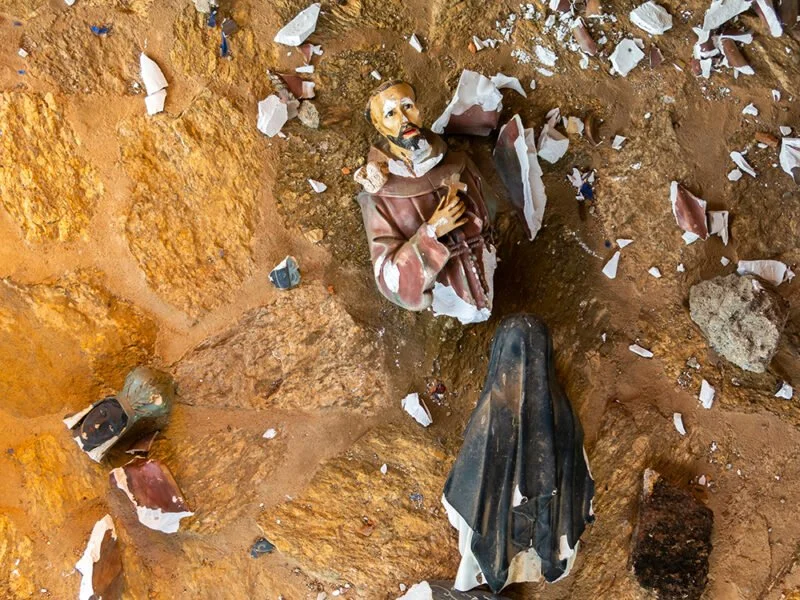
Picture of a broken statue of a Catholic Saint
Throughout history, the Christian church has often grown not in times of comfort, but in seasons of pressure and persecution. While suffering and opposition are never easy—and should never be minimized—there is a consistent pattern in both Scripture and history: persecution, while painful, can refine, unify, and strengthen the faith of believers and the church as a whole.
One of the most immediate effects of persecution is that it clarifies what truly matters. When following Christ comes with a cost, faith is no longer casual or cultural—it becomes intentional. Believers are forced to wrestle with what they truly believe and why. This kind of pressure often strips away superficial commitment and replaces it with a deeper, more resilient faith. In 1 Peter, trials are described as refining faith like fire refines gold, removing impurities and revealing what is genuine.
Persecution also has a way of strengthening unity within the church. When believers face opposition together, shared hardship creates deeper bonds. Differences that might seem significant in times of comfort often fade in the face of a common challenge. The early church, as seen in Acts, experienced this kind of unity. Despite threats and resistance, they gathered, prayed, and supported one another with a sense of purpose that was strengthened by adversity.
Another important outcome is boldness. While it might seem counterintuitive, opposition can actually embolden faith rather than silence it. When believers are pushed, many find a renewed courage to stand firm in what they believe. In Acts, early Christians responded to persecution not by retreating, but by praying for greater boldness to continue sharing their message. This kind of response shifts the focus from fear to conviction.
Persecution can also purify the message of the church. When faith is no longer tied to social acceptance or cultural advantage, it becomes clearer and more authentic. The motivation shifts away from convenience or tradition and toward genuine belief. This often leads to a more focused and sincere expression of the Gospel—one that resonates more deeply because it is lived out under pressure.
Historically, persecution has also contributed to the spread of Christianity. When believers are forced to leave their homes or communities, they often carry their faith with them into new regions. What begins as displacement can lead to unexpected growth. This pattern has been seen repeatedly, where hardship unintentionally becomes a catalyst for expansion.
At the same time, persecution deepens dependence on God. When external support systems are removed or threatened, believers often turn more fully to prayer, Scripture, and spiritual reliance. This dependence fosters a more intimate and active faith—one that is not sustained by comfort, but by trust.
It’s important to acknowledge that persecution is not something to seek out or romanticize. It brings real pain, loss, and hardship. Yet, within that reality, there is also a consistent theme: God can use even difficult circumstances to strengthen and shape His people.
Ultimately, persecution reveals the depth and authenticity of the church. It tests what is built on convenience and exposes what is built on conviction. And while it may challenge the church externally, it often strengthens it internally—producing a faith that is more unified, more resilient, and more deeply rooted than before.
In that way, even in the face of opposition, the church does not simply endure—it grows.
