

the science behind why its hard to share your faith
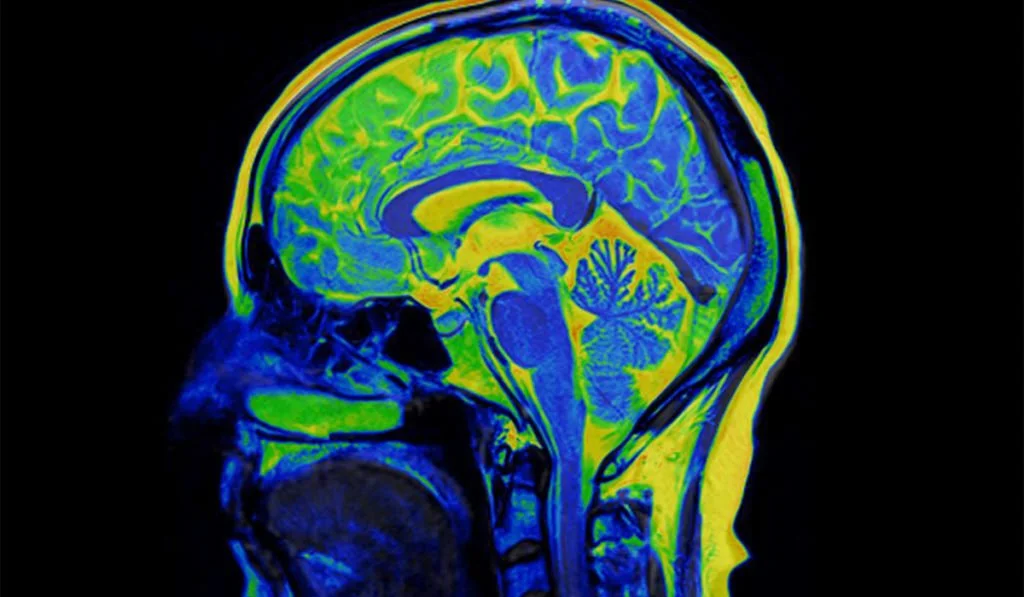
Picture of a brain scan
For many people, sharing their Christian faith doesn’t just feel spiritually challenging—it feels mentally and emotionally difficult in a very real, almost instinctive way. While this struggle is often framed in terms of courage or confidence, there are also clear insights from psychology and neuroscience that help explain why talking about faith can feel so hard.
At the core of this challenge is the brain’s sensitivity to social risk. Humans are wired for connection, and belonging to a group has historically been essential for survival. Because of this, the brain treats the possibility of rejection as a serious threat. When you consider bringing up faith—especially in a setting where it might not be welcomed—the brain can activate a stress response similar to physical danger. This response is tied to structures like the amygdala, which plays a key role in detecting threats and triggering fear. Even if the actual risk is small, the perceived social cost can feel significant.
Another factor is something known as cognitive dissonance. This cognitive dissonance occurs when a person holds conflicting beliefs or values. When you share your faith with someone who sees the world very differently, both parties may experience discomfort. Anticipating that tension can make you hesitant to start the conversation in the first place. Your brain naturally tries to avoid situations that might create internal or external conflict.
There’s also the role of social norms. In many modern environments, faith is considered a private matter. Bringing it into public or professional conversation can feel like breaking an unspoken rule. Behavioral science shows that people are strongly influenced by perceived norms—often choosing to stay silent rather than risk standing out. This is closely related to normative social influence, where individuals conform to group expectations to avoid disapproval.
Fear of negative evaluation is another powerful force. Psychologists sometimes refer to this as evaluation apprehension, a form of social anxiety where individuals worry about being judged. Sharing your faith can feel like putting a deeply personal part of yourself on display, which raises the emotional stakes. The more important your faith is to you, the more vulnerable you may feel when talking about it.
There’s also a neurological component tied to uncertainty. The brain generally prefers predictability, and conversations about faith are often unpredictable. You don’t always know how someone will respond, what questions they’ll ask, or whether the interaction will become uncomfortable. This uncertainty can increase mental strain and make avoidance feel like the easier option.
Interestingly, habits and past experiences reinforce these patterns. If someone has had a negative experience sharing their faith—such as being dismissed or ridiculed—the brain can “learn” to associate evangelism with discomfort. Over time, this creates a feedback loop: the more you avoid these conversations, the more unfamiliar and intimidating they become.
However, the science also points toward a hopeful reality: these responses, while powerful, are not fixed. The brain is capable of change through a process known as neuroplasticity. Repeated positive experiences, even small ones, can gradually reduce fear and build confidence. What feels overwhelming at first can become more natural over time.
Understanding the science behind this struggle doesn’t eliminate the challenge, but it does reframe it. The difficulty of sharing your faith isn’t simply a lack of boldness or knowledge—it’s deeply connected to how the human brain is wired for safety, connection, and stability.
In that light, the struggle becomes more understandable—and more approachable. Instead of expecting fear to disappear, it can be recognized as a natural response, one that can be navigated with patience and intentionality. And as those small steps are taken, what once felt impossible can slowly begin to feel within reach.
